OpenAI Open-Sources an AI Security Auditor — the Same Week Anthropic's AI Cracked Crypto Algorithms
OpenAI just released Codex Security, an Apache-licensed CLI that finds, validates, and fixes code vulnerabilities. Days earlier, Anthropic reported its models found weaknesses in cryptographic algorithms. AI just became a security researcher — at both frontier labs at once.
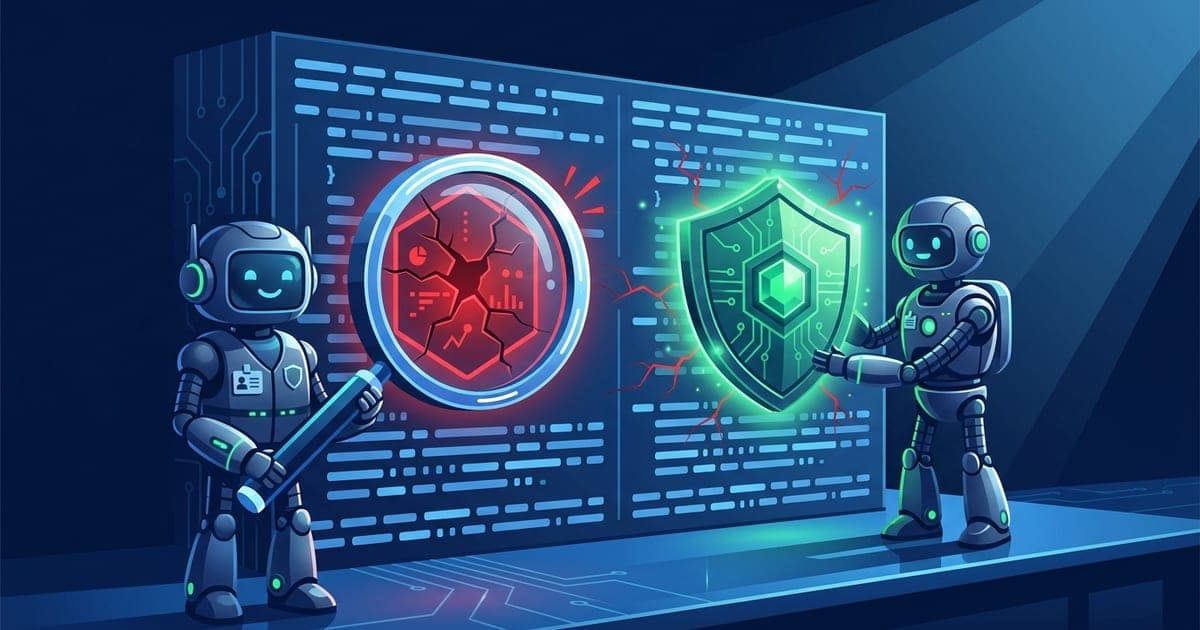
Something quietly historic happened in AI this week, and it didn't come from a benchmark or a funding round. Within days of each other, both frontier AI labs shipped evidence of the same shift: AI systems are becoming working security researchers.
On Tuesday, Anthropic published research showing its models autonomously discovered previously unknown weaknesses in cryptographic algorithms — the kind of work that normally takes specialist cryptanalysts. And now OpenAI has open-sourced Codex Security, a command-line tool and TypeScript SDK that scans codebases for security vulnerabilities, validates that its findings are real, and proposes fixes — under an Apache 2.0 license, free for anyone to run.
What Codex Security actually is
Strip away the announcement language and it's refreshingly concrete. Codex Security is an npm package (@openai/codex-security) that you point at a repository: it scans the code, reviews changes, tracks findings over time, and plugs into CI pipelines so every pull request gets a security review. It requires Node.js 22+ and Python 3.10+, authenticates with either a ChatGPT sign-in or an OpenAI API key, and ships with an SDK for building it into your own tooling. The repo crossed 3,000 GitHub stars almost immediately, and the release currently sits at the top of Hacker News with one of the biggest discussions of the week.
The three-step loop in its description deserves attention: find, validate, fix. The "validate" step is the interesting one — false positives are the plague of automated security scanners, and the pitch here is an AI that checks whether a vulnerability is actually exploitable before bothering you with it.
Why the same-week timing matters
One lab shipping a security tool is a product launch. Both frontier labs demonstrating AI security research capability in the same week is a signal about where model capabilities actually are.
Anthropic's work aimed up the difficulty curve: cryptographic analysis, where its models found weaknesses in algorithms that had survived expert human review — findings notable enough that they were covered by The New York Times and the security trade press within hours. OpenAI's release aims at the everyday version of the same skill: the millions of ordinary codebases full of ordinary vulnerabilities that no human security team has time to audit. Between the two, the message is consistent — reading code for flaws, the core skill of a security researcher, is now something frontier models do well enough to productize and to publish research about.
There's an arms-race subtext, too. Every capability that helps a defender audit code can, in principle, help an attacker find exploitable bugs. Open-sourcing the defensive tooling is one answer to that: if AI-assisted vulnerability discovery is coming regardless, putting the find-validate-fix loop in every developer's terminal shifts the balance toward defenders who patch before attackers probe. Whether that balance holds is one of the most consequential open questions in security right now.
The catch: who audits the auditor?
A week this bullish on AI-as-security-researcher deserves its counterweight, and it arrived from an unexpected direction: mathematical logic. As we covered in our piece on why AI "lie detectors" have a mathematical blind spot, new research applies Tarski's undefinability theorem to show that no universal tool for verifying AI honesty can exist. The relevance here is direct — as AI systems take on security work, our ability to verify their claims becomes the load-bearing question, and it has known theoretical limits. An AI that validates its own vulnerability findings is genuinely useful engineering; it is not, and mathematically cannot be, an oracle.
None of that diminishes what shipped this week. It just frames it honestly: AI security tooling is arriving faster than AI verification tooling, and the gap between the two is where the interesting risks live.
What it means for developers
Practically: if you write software, an AI security review of every commit just became free and one npx command away — the same trajectory that took AI coding assistants from novelty to default in about two years, as we traced in our comparison of Copilot, Cursor, and Claude Code. Security review may be next to make that jump from specialist service to ambient tooling. For a solo developer or small team that could never afford a security audit, that's a real change in what "secure by default" can mean.
FAQ
What is OpenAI Codex Security?
An open-source (Apache 2.0) command-line tool and TypeScript SDK from OpenAI that scans code repositories for security vulnerabilities, validates the findings, proposes fixes, and integrates with CI pipelines. It's installed via npm as @openai/codex-security.
Is Codex Security free?
The tool itself is open source and free. Running scans requires access to Codex Security via a ChatGPT sign-in or an OpenAI API key, so the underlying model usage follows OpenAI's account and API pricing.
What did Anthropic's AI find in cryptographic algorithms?
In research published this week, Anthropic reported that its models autonomously discovered previously unknown weaknesses in cryptographic algorithms, including issues that had escaped expert human review — a milestone for AI-driven security research.
Can AI replace human security researchers?
Not yet, and this week's releases don't claim to. They show AI handling real parts of the job — scanning, triaging, validating, patching — at a scale humans can't match, while humans remain essential for judgment, novel attack classes, and verifying what the AI reports.
About the author
UbedullaFounder & Editor
Founder and editor of The Bot Post, covering AI news and technology.