The US Just Banned Chinese Robot Dogs and Humanoids — Here's Why Washington Is Scared of Them
The FCC just blocked new imports of Chinese-made humanoid robots, four-legged robot dogs, and power inverters over national-security fears. Here's what's banned, why officials say a robot dog is a threat, and what it means for the US-China robot race.
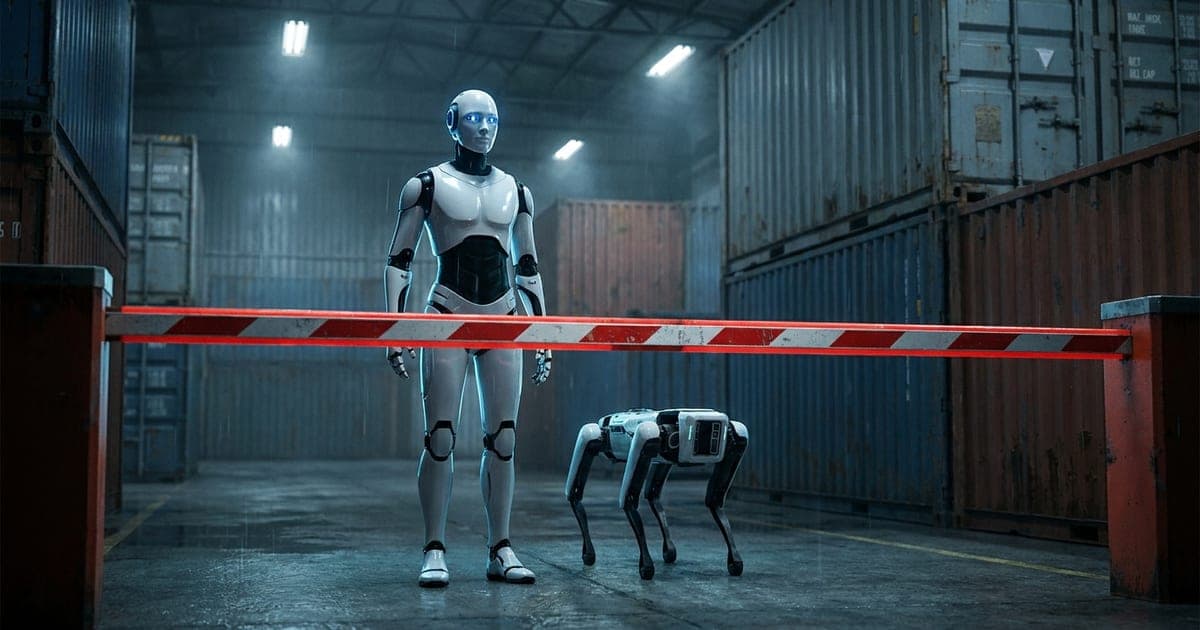
The robots are here — and Washington just slammed the door on the ones made in China. This week the Federal Communications Commission moved to block new imports of Chinese-made humanoid robots and four-legged "robot dogs," folding the machines into the same national-security dragnet that already covers Huawei gear and Chinese-made drones. If you were planning to buy a Unitree robot dog in the United States next year, the government would very much prefer you didn't.
It is one of the first times a major government has treated consumer and commercial robots as a strategic threat on par with telecom equipment. Here is what was actually banned, why the FCC says these machines are dangerous, and what it means for the fast-moving race to put robots into warehouses, homes, and battlefields.
What exactly got banned
The FCC's action targets three categories of new, not-yet-authorized hardware: humanoid robots, quadruped "robot dogs," and power inverters (the devices that connect solar panels and batteries to the grid). Crucially, the ban applies only to products that have not yet been approved for sale in the US. Machines already authorized and on the market are not being yanked from shelves — though the FCC pointedly reserved the right to revoke existing approvals later.
In practice, that means a company like Unitree — the Chinese firm whose sub-$1,600 robot dogs and humanoids have flooded research labs, viral videos, and hobbyist workshops worldwide — can no longer get its next-generation models cleared for the American market. Unitree was recently added to a US Defense Department list over alleged ties to China's military, and it now sits at the center of this fight. The inverter half of the ban hits suppliers like Huawei and Sungrow.
Why is the US afraid of a robot dog?
The fear is not that a robot dog will suddenly go rogue. It is that it doesn't have to be rogue to be dangerous — it just has to be someone else's. A modern humanoid or quadruped robot is a rolling sensor platform: cameras, microphones, LIDAR, precise location data, and a constant internet connection back to servers that, in the case of Chinese hardware, may sit under Chinese jurisdiction.
The FCC framed the risk in supply-chain terms, warning that these devices "could create supply chain vulnerabilities that could disrupt US economic and national security." The unspoken nightmare scenario, echoed across the coverage, is remote control — the idea that in a crisis, a foreign government could reach into thousands of networked robots operating inside American factories, ports, hospitals, and critical infrastructure, and turn them into eyes, ears, or worse. It is the same logic that got Huawei's networking gear and DJI's drones restricted: the worry isn't what the device does today, but what it could be told to do tomorrow.
The bigger game: the robot race
This is really a shot in the AI-and-automation cold war. Chinese firms, led by Unitree, have come to dominate the low-cost end of the humanoid and robot-dog market, undercutting Western rivals by a wide margin and putting capable machines in more hands than anyone else. The US counter-bench — Tesla's Optimus, Figure AI, Agility Robotics, and Boston Dynamics — builds impressive robots, but not yet at China's price or volume.
By walling off the American market, the FCC is doing two things at once: closing a potential surveillance vector, and buying domestic robotics companies room to scale without being priced out by cheaper imports. Washington has said the broader goal is reducing US reliance on Chinese technology across the industries that matter most for the next decade — artificial intelligence, energy, and data centers. Robots, which sit at the intersection of all three, were an obvious next target.
What happens now
China's embassy pushed back immediately, urging the US to "stop smearing Chinese companies" and warning of countermeasures — the familiar opening moves of a trade fight. For American buyers, the near-term effect is narrow: existing robots keep working, and approved models stay on sale. The longer-term effect is bigger. A ban on new authorizations freezes the pipeline, and if the FCC follows through on revoking existing approvals, today's Chinese robots could become tomorrow's orphaned hardware.
Either way, the message is unmistakable: the machines that were supposed to be a neutral tool of the future have just become another front in the US-China tech war.
Frequently asked questions
Does the ban mean I have to get rid of a robot I already own?
No. The FCC's action targets new models that have not yet been authorized for sale in the US. Robots and devices already approved and on the market are not being recalled. However, the FCC said it reserves the right to revoke existing authorizations in the future, so the situation could change.
Which company is most affected?
Unitree, the Chinese maker of low-cost humanoid robots and quadruped "robot dogs," is the most prominent target — its next-generation models can no longer be cleared for the US market. The ban also covers power inverters from suppliers such as Huawei and Sungrow.
Why are robots treated like a security threat?
Modern robots carry cameras, microphones, precise-location sensors, and always-on internet connections. US officials worry that foreign-made units could be compromised or remotely controlled, turning networked robots inside American infrastructure into surveillance tools or points of disruption. It is the same reasoning applied earlier to Huawei networking equipment and Chinese-made drones.
Which US companies benefit?
Domestic robotics makers — Tesla (Optimus), Figure AI, Agility Robotics, and Boston Dynamics among them — gain breathing room to scale without being undercut by cheaper Chinese imports, though they still trail China on price and volume.
Is this part of a bigger policy?
Yes. The move extends a broader campaign to cut US reliance on Chinese technology across artificial intelligence, energy, and data centers. Robots sit at the intersection of all three, which is why they became a target.
Reporting based on the FCC's announcement and coverage by The Associated Press, Reuters, the Guardian, Al Jazeera, and others. The Bot Post will update this story as the rules and any Chinese countermeasures develop.
About the author
UbedullaFounder & Editor
Founder and editor of The Bot Post, covering AI news and technology.