Google Playground Turns Prompts Into Games. The Real Test Is Whether Friends Replay Them.
Google’s Playground lets people create and share browser games through prompts. Here’s the launch, the US access limit and an original idea to start small.
Most people have had an idea for a game. Far fewer have had the patience to build the menu, controls, collision rules and restart button needed to let someone else play it.
Google’s new Playground experiment tries to shorten that journey. Announced October 7, the browser-based platform lets people describe a game, revise it through conversation and share the result. The launch announcement limits initial access to US users aged 18 and older, with creation access rolling out in tiers tied to Google AI subscriptions.
The interesting promise is that more people can reach a playable first attempt. What happens after that—the moment a friend actually tries it—is where game design starts to get interesting.
From a prompt to something a friend can play
Google describes starting from a blank canvas or existing prompts, then requesting changes to rules, characters and environments. Finished games can stay private, be shared by link, or be published to a community gallery. Leaderboards and multiplayer are supported in selected genres, rather than promised for every imaginable game. These are the announced features.
That sharing step gives the product a natural social loop: make something small for someone specific, send it, and see whether they want another turn.
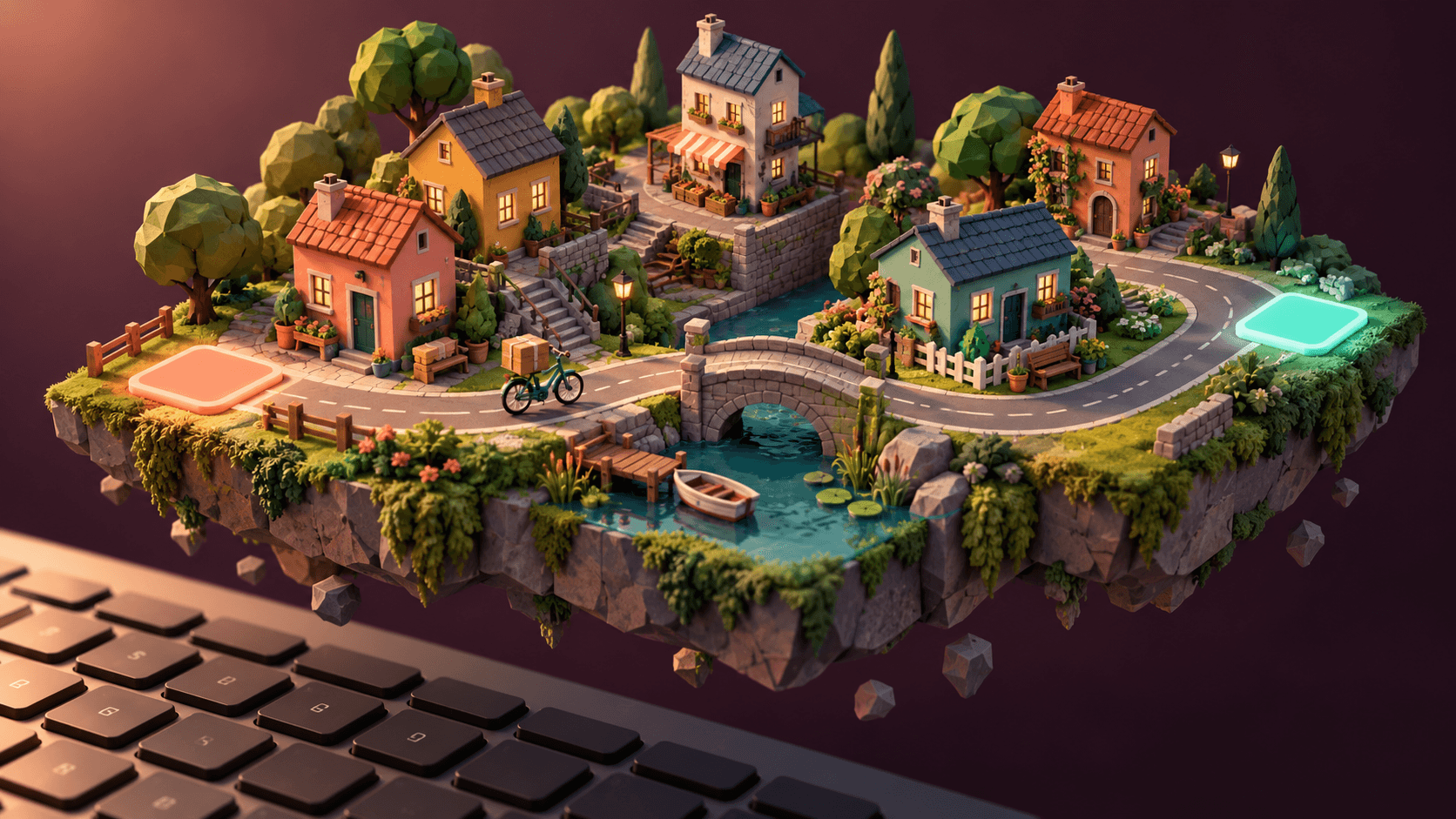
Imagine making a tiny delivery game for a friend who knows your neighborhood. The joke could be a fictional street where every shortcut has an inconvenient puddle. It does not need a huge world to be personal, recognizable or amusing.
This is a proposed use case, not a game we have built in Playground. We have not tested the platform, its generation quality or the limits of its creation tiers.
The catch: playable and enjoyable are separate milestones
A game can run correctly and still be dull. A player might understand the rules but have no interesting choice to make. They might lose without knowing why. They might win and feel no reason to try again.
Those are useful problems for a beginner to encounter. They turn a vague instruction such as “make it more fun” into something you can observe and change.
For a first experiment, I would choose one action and one tradeoff. Perhaps the player steers a bicycle toward deliveries, but faster routes require tighter turns. Build that decision before asking for a shop, an upgrade system and a map full of characters.
The advantage of a short game is feedback. If a round lasts a minute, a friend can try several versions and explain the difference. A sprawling unfinished world gives you much less information about whether its central idea works.
A first prompt worth trying
Here is an original starter prompt designed for a small experiment. It is a suggestion, not a verified recipe or a guarantee of what Playground will produce:
Create a top-down bicycle delivery game with one small neighborhood and rounds lasting 60 seconds. The player steers with arrow keys, with clear touch buttons for mobile. Collect parcels and deliver them to matching destinations. Offer a safe longer route and a short route with tight corners. Keep the art simple and readable. Explain the controls before the first round, show why a delivery failed, and include an obvious restart button. Start with one level and no upgrades, accounts or purchases.
Once that first version exists, change one thing at a time. If the bicycle feels awkward, fix the steering before adding more streets. If players cannot find the delivery point, fix its visual cue before adding a timer bonus.
This is also a good habit when learning to build with AI: keep the current problem small enough that you can tell whether the proposed change helped.
Watch the player before rewriting the prompt
Ask someone to try the game without explaining it yourself. Watch their first ten seconds. Do they know what moves, what matters and what success looks like?
After a round, ask three concrete questions: Where did you feel stuck? What made you lose? Would you try again? Their answers are more useful than a polite “looks cool.”
Keep a simple version log. For example: “Version two makes the destination brighter; two players found it without help.” That does not require advanced analytics. It requires paying attention.
There is a satisfying creative role here even when AI generates the implementation. The creator decides which experience is worth pursuing and notices where the result falls short.
Unity Spark is a separate, unfinished part of the story
Google also describes a future Unity Spark integration. Unity’s own Spark page presents it as coming soon, offers a waitlist and shows example games. Readers should not mistake a future integration for a tool every Playground user can already use.
If you want to turn a prototype into a larger project, first identify what would need to carry over: gameplay logic, art, controls, saved progress and whatever editing workflow you expect. An announcement about future integration is not enough to establish all of those details.
It is reasonable to enjoy the experiment now and leave that larger decision open.
Sharing brings a second set of decisions
The Playground community guidelines prohibit categories including malicious software and misleading content, and distinguish allowed parody from deceptive impersonation. Publishing to a gallery still comes with responsibilities for the creator.
For a first public game, my recommendation is to use original fictional characters, avoid personal details about friends and make the goal easy to understand. A private joke can work beautifully in a small group while being confusing or uncomfortable in a public gallery.
Playground’s potential is in getting an idea far enough that someone can react to it. The most rewarding result might be a tiny game that makes three friends laugh—and teaches its creator exactly what to improve next.
Quick answers
Should I start with a large multiplayer world?
For a first attempt, we recommend a short, single-level game with one clear action. Expand only after the basic interaction is enjoyable.
Is this a hands-on review?
No. It is a source-based launch explainer with an original prompt and suggested playtesting process.
Researched October 8, 2026, using Google’s launch announcement, Unity’s Spark page and Playground’s community guidelines. Availability and features are company-reported. The example game, prompt and playtesting advice are The Bot Post’s analysis. AI-assisted, source-checked article.
About the author
UbedullaFounder & Editor
Founder and editor of The Bot Post, covering AI news and technology.